摘要
研究不同地貌条件下建设项目分布占用耕地资源上限比例指标,可为建设项目不占或少占耕地提供科学依据。本文以湖南省为研究区,基于国土变更调查数据、DEM数据,构建地形分区模型和耕地密度分区指标,采用GIS技术和统计分析法,结合湖南省2011—2020年建设项目、2021—2023年省级审批的单独选址项目,研究确定线性工程和块状建设项目占耕地比例上限阈值。取得如下认识:(1)湖南省耕地空间分布的密集程度差异明显,将全省划分为 4 类耕地密集区,耕地密度分别为 35.66%、26.99%、22.34% 及 13%; (2)建设项目占耕地比例与区域耕地密度呈正相关,耕地密度越高,建设项目耕地占用比例相应越高;(3) 结合地形分区/行政分区法与80%累计频率取值法,确定线性工程项目按地形分区分为3类,耕地占用比例上限分别为30%、40%、45%,块状项目按地形分区分为4类,耕地占用比例上限分别为67%、38%、37%、 25%;(4)通过构建分区分类确定的建设项目占耕地比例上限指标,各类项目的耕地占用核减率可达 11.31%~22.02%。构建的分区分类占耕地比例上限指标体系,可为区域耕地保护与用地审批管理提供量化决策依据。
关键词
Abstract
To study the upper limit ratio index of cultivated land resources occupied by the distribution of construction projects under different geomorphological conditions, and to provide a scientific basis for construction projects to occupy no or less cultivated land. Taking Hunan Province as the study area, based on land use change survey data and DEM data, this paper constructs a terrain zoning model and cultivated land density zoning indicators, adopts GIS technology and statistical analysis methods, and combines the construction projects in Hunan Province from 2011 to 2020 and the separately selected projects approved at the provincial level from 2021 to 2023 to study and determine the upper limit thresholds of cultivated land occupation ratio for linear projects and block construction projects.Four conclusions were obtained: (1) The spatial distribution density of cultivated land in Hunan Province exhibits significant differences, allowing the province to be divided into four types of cultivated land density zones, with cultivated land densities of 35.66%, 26.99%, 22.34%, and 13%, respectively. (2) The ratio of cultivated land occupied by construction projects is positively correlated with the regional cultivated land density; the higher the cultivated land density, the higher the ratio of cultivated land occupied by construction projects. (3) By combining terrain zoning/administrative zoning methods with the 80% cumulative frequency value method, the upper limits of cultivated land occupation ratio for 3 types of linear engineering projects in Type Ⅰ, Ⅱ and Ⅲ terrain areas are determined as 30%, 40% and 45% respectively, and the upper limits for 4 types of block projects are 67%, 38%, 37% and 25% respectively. (4) By establishing upper limit proportion indicators for cultivated land occupied by construction projects based on zoning and classification, the reduction rate of cultivated land occupied by various types of projects can reach 11.31% to 22.02%. The constructed zoning and classification index system for the upper limit of cultivated land occupation ratio can provide a quantitative decision-making basis for regional cultivated land protection and land use approval management.
0 引言
土地是人类赖以生存和发展的基础性自然资源,耕地作为土地资源中最具生产价值的核心组成部分,不仅承担着农产品供给的核心功能,还兼具民生保障与生态调节的重要作用,是筑牢国家粮食安全的根本根基。全球耕地资源流失与建设用地扩张之间的矛盾突出,联合国粮食及农业组织监测数据显示,2000—2020年全球因建设用地扩张流失的耕地规模与法国国土面积相当,其中亚洲地区在耕地流失总量中的占比高达 52%(范辉等,2015;陈宇琼和钟太洋,2016;杨君等,2025)。过去30年,中国经济社会实现跨越式发展,城镇化建设步伐不断加快、成效显著,然而,作为经济建设的重要空间载体,土地利用模式随经济建设的推进发生了显著变化,耕地流失与经济建设占用耕地之间的矛盾愈发凸显,耕地资源持续减少的趋势也变得日益严峻 (刘涛等,2018)。建设活动占用耕地、农业结构调整以及这一过程的不可逆性,已成为影响耕地可持续发展的关键因素,也是导致中国耕地面积减少的主要原因(朱小青等,2024)。自然资源部的数据显示,仅在 1999—2015 年间,全国因建设活动占用的耕地面积达3.954万 km2,对中国的粮食安全构成了潜在威胁。湖南省是中国重要的粮食生产基地,粮食产出占全国的4.4%。因此,本文以湖南省为研究区,研究耕地资源与建设项目空间布局的关系,确定建设项目占用耕地的最大数量,对于保护耕地资源,遏制耕地流失,保障粮食安全与可持续发展具有重要意义。
近年来,国内外学者围绕耕地保护政策体系、制度机制、土地利用分区管制、建设用地扩张占用耕地时空特征、建设占用耕地对生态影响、耕地质量等内容开展大量研究,形成了较为丰富的理论成果与实践借鉴,尤其,耕地占补平衡政策成为协调城镇建设与耕地保护的核心制度,其实施对优化中国国土空间开发格局和遏制耕地流失意义重大(王寅杰和刘殿峰,2023;刘晴晴等,2025)。从国外研究来看,国外学者在耕地保护的量化阈值设定与空间管控方法上已形成了较为系统的研究体系。在土地利用分区与量化管控方面,形成了发达国家土地利用分区的法律框架与开发控制机制,为后续基于区划的耕地量化管控奠定了制度基础(Alterman, 1997)。在此基础上,欧美学者进一步发展了多种量化阈值工具与方法,美国的“ 城市增长边界 (UGB)”体系,通过划定刚性边界来约束城市建设对农业用地的侵占(Marin,2007);意大利的“农业用地敏感性指数(SIAL)”,通过多指标综合评价量化评估农用地转为建设用地的风险阈值(Mazzocchi et al.,2013)。虽然欧美国家建立了较为完善的耕地量化保护制度,但其核心逻辑仍依赖市场机制与农业补贴政策,缺乏对国土空间资源禀赋空间异质性的精细化响应。在生态补偿与休耕制度方面,欧美国家的农业补贴休耕政策通过经济激励引导耕地生态保护,但此类政策侧重经济补偿,并未从本质上解决国土空间资源禀赋有限、开发利用格局失衡等现实问题(Castro et al.,2020)。从国内研究来看,国内学者则立足中国人多地少、耕地刚性约束突出的基本国情,围绕城镇化进程中城镇扩张与耕地保护的平衡路径开展大量研究。从建设项目占用耕地研究的空间尺度上看,学者们主要聚焦全国、城市群、省级、市级、区县级、乡镇级、地块等级开展了建设占用耕地时空差异等分析(李宁和郑新奇, 2005;吴晓忠和倪志良,2015;胡伟艳和刘恬,2017; 刘彦随等,2019;王文旭等,2020;谢贤健,2024;彭能舜等,2025;王潘等,2025;殷玉忠和刘瑞,2025),为本文的研究提供借鉴;从研究方法上来看,无锡、济南、开封构建了区域容许耕地转换量化模型,预测耕地转化最大容许量等(刘彦随等,2004;程维明和周成虎,2014;吴崇书等,2015;Gao et al.,2019;陈俊宇等,2020;宋小青等,2025),为建设占用耕地量化分析提供方法依据,为本文确定研究方法提供建议。省级尺度作为核心研究层面,已有多项实证成果,其中朱小青等(2024)在陕西省的研究明确,建设项目占用耕地是区域耕地减少的重要诱因,聚焦建设项目用地总规模中耕地占用比例上限的确定; 李荆荆等(2025)在湖北省的研究进一步印证了这一结论,其研究指出湖北省建设项目耕地占用呈显著空间分异特征,交通类项目耕地占用占比最高,且平原区占用比例远高于丘陵、山地区。对比两项研究,均确认了项目占用耕地在区域耕地流失中的主导作用,但陕西省研究更侧重于确定耕地占用比例的“数量上限”,湖北省研究则更关注空间异质性,阐述了不同地形区、不同项目类型占用耕地的结构性差异。综合来看,已有研究为建设占用耕地管控与耕地保护提供了重要理论基础和技术借鉴,但在耕地的空间分布差异、地形差异与建设项目布局关系、建设项目占用耕地数量上限等方面的研究较为薄弱,且现有研究多采用单一维度分区,鲜有双重分区叠加结合累计频率法的实证。此外,《自然资源部等7部门关于加强用地审批前期工作积极推进基础设施项目建设的通知》要求,耕地密度是区域内耕地集中程度和分布特征的重要指标,建设项目用地应区分地形分区、耕地分区开展节约集约用地引导。基于此,由于区域耕地空间分布禀赋差异显著,建设项目耕地占用管控上限不宜采用统一标准,呈现明显区域分异特征。为此亟须结合地形分区与耕地密度分区,开展分区分级精细化研究,科学划定差异化建设项目占耕地比例上限指标。
根据《中共中央办公厅国务院办公厅关于加强耕地保护提升耕地质量完善占补平衡的意见》中 “严守18亿亩耕地保护红线”“落实最严格耕地保护制度”的要求,《节约集约利用土地规定》(2019年修正)中严控新增建设占用耕地、提升用地效率的导向,本研究以湖南省为研究区,依托土地利用案例库中的建设项目、地形分区成果和国土变更调查数据,选取县域耕地密度、地形分区作为重要指标,构建差异化分区框架,探索不同分区条件下基于“80% 累计频率值法”建设项目占用耕地比例上限的定量测算方法,并采用2021—2023年省级审批单独选址项目数据开展验证,科学评估所确定上限比例。通过建立分类别、分区域的精细化管控阈值体系,完善了省级尺度建设项目占用耕地阈值定量测算技术路径,为湖南省自然资源管理部门统筹耕地保护与项目用地审批提供科学、可操作的决策支撑,也为同类地区开展建设项目耕地占用精细化管控提供参考。
1 研究区与数据源
1.1 研究区概况
湖南省位于中国中部地区,地处东经108°47'~114°15',北纬 24°39'~30°08',国土面积约为 2.12× 10⁵ km2,现辖122个县级行政区划,县级行政区作为耕地保护与粮食安全落实的基础单元,是省域建设项目用地审批与耕地管控的关键层级(付兆刚等, 2024;周雨彤等,2025)。全省地貌类型多样,以山地、丘陵、平原为主,整体呈东、南、西三面环山,中部丘岗起伏、北部平原开阔的不对称马蹄形格局 (冯达等,2023;段中满等,2024),呈现出“七山二水一分田”空间分布特征(图1)。区位条件优越,具备 “承东启西、联南接北”的空间特征。境内河网密布、水系发达,以洞庭湖为中心,湘、资、沅、澧四水贯穿全境,水资源十分丰富,是中国重要的粮食生产基地,以仅占全国耕地总量的 2.86% 的耕地资源生产出全国4.4%的粮食,在保障中国粮食生产安全方面具有重要战略意义(胡贤辉等,2026)。全省耕地空间分布不均,北部洞庭湖地区、中部部分丘陵地带及四水河谷地带集聚了64%的耕地,且优质耕地多分布于此;而湘西、湘南山区耕地较为破碎化,耕地质量与分布的区域差异显著,该分布特征直接影响建设项目用地布局与耕地保护管控难度。

图1湖南省行政区划(a)及地形分区空间分布示意图(b)
1.2 数据来源与处理
(1)土地利用数据:考虑涉及近10 a建设项目占耕地情况,本研究以 2020 年度各县(区、市)国土空间变更调查数据库为基准,包括县级行政区数据、建设用地图斑数据及 2009—2020 年耕地地类图斑数据。
(2)建设项目类型及数据:根据项目建设特点分为线性工程和块状工程两类,分析过程包含两个阶段数据,第一阶段数据为2011—2020年已批已建节约用地的建设项目,通过分析影响节约集约用地指标参数,构建节地评价模型,提取 2011—2020 年节地水平靠前的已批已建建设项目1920个,含线性工程项目 290 个,块状项目 1630 个,其中线性工程主要包含交通、水利类等项目,块状工程主要包含工业、住宅、公共管理与服务类等项目;第二个阶段数据为2021—2023年单独选址建设项目,从湖南省自然资源厅收集 961 个,其中,线性工程项目 106 个,块状项目855个,为精准测算不同类型建设项目的占用耕地比例上限提供支撑。
(3)地形分区数据:利用湖南省土地利用案例库建设成果中的地形分区数据,分区数据中 0°~3° 为Ⅰ类地区,以平原地区为主,主要集中在环洞庭湖区域,包含28个县级行政区;3°~20°为Ⅱ类地区,以丘陵地区为主,主要集中在湘中、湘南部分区域,包含47个县级行政区;大于20°为Ⅲ类地区,以山地地区为主,主要集中在湘西、湘南山区,包含47个县级行政区。
(4)建设项目占用耕地比例计算:占用耕地比例可以反映出不同地形条件下建设项目占用耕地的差异(李荆荆等,2025)。基于 ArcGIS 平台,针对 2011—2020年的建设项目占耕地数量计算,按照省级建设项目占耕地计算方法,结合土地利用案例库中建设项目继承的建设项目占用耕地的属性信息,将建设项目与当年耕地进行叠加分析并逐年退返,确定占耕地面积及比例值;2021—2023年建设项目占用耕地数据从相应建设项目审批资料中收集补充,确定占用耕地比例。
2 研究方法
2.1 耕地密度分区划定
耕地资源在不同地形地貌区其分布存在显著差异。一般情况下,平原地区耕地相对集中且质量较高,而山地、丘陵地区耕地则较为分散且质量相对较低;另外,在地形复杂、耕地资源稀缺的地区,建设项目占用耕地对当地农业生产和社会稳定的影响更为显著,本文充分利用已有地形分区数据:0°~3°为Ⅰ类地区、3°~20°为Ⅱ类地区、大于20°为Ⅲ类地区。
建设项目占耕地数量与建设项目所在县域内耕地密度呈正相关,耕地密度越高,建设项目占耕地数量增加。因此,本文采用县域耕地密度作为研究的 1 个指标,以县级行政区为单元计算区域内耕地占用行政区面积比例作为耕地密度指标(朱小青等,2024),本研究提取湖南省 2020 年耕地数据,以县为单位分析,确定耕地密度阈值,超过阈值则为耕地密集区,低于阈值则为耕地非密集区,以此反映区域耕地分布的密集程度。
(1)
式(1)中,Cj为耕地密度(%),Rt为区域耕地面积(km2),Ri为区域总面积(km2)。
2.2 建设项目耕地占用比例上限阈值确定方法
建设项目涉及耕地占比上限阈值过高,对建设项目占耕地比例限制较少,无法引导少占、不占耕地,耕地占比上限过低,则影响项目审批操作性,项目用地效率无法保障,因此,考虑1年内建设项目审批数量较多,不同的项目涉及耕地数量和比例不同。本研究采用平均值与累计频率值作为关键参数,平均值是指不同地形分区线性工程、块状工程耕地占用比例的平均值;累计频率值是指不同地形分区线性工程、块状工程项目耕地占用比例累计百分比达到指定阈值时所对应的耕地占用比例数值。本文将2011—2020年的建设项目按照地形分区、耕地密度进行分区,将不同地形分区、耕地密度条件下的线状、块状建设项目累计频率值达到一定阈值的建设项目涉及耕地比例值作为该区域建设项目耕地占用比例上限阈值,并选取2021—2023年已审批的建设项目作为验证样本,通过对比样本项目校验阈值的科学性与适用性。
(2)
式(2)中,Cn为单个项目耕地密度(%),St为单个项目占用耕地面积(km2),Si为单个项目用地面积 (km2)。
(3)
式(3)中,Cp为建设项目 80% 累计频率值,St为单个项目占用耕地面积(km2),Si为单个项目用地面积(km2)。
2.3 建设项目耕地占用比例上限阈值确定结果验证方法
为科学检验分区分类建设项目占耕地比例上限阈值的合理性与适用性,鉴于2021—2023年数据未参与阈值测算及模型构建,可作为独立样本开展外部验证,确保结论客观可靠。因此,本研究以该时段湖南省省级审批单独选址项目为独立验证样本,对阈值的合理性进行实证检验,并量化测算其实施后的耕地节约率。
(4)
(5)
(6)
式(4)~(6)中,Alimit为允许占用耕地面积上限 (km2),S为项目总规模,R80%为项目所在分区的80% 累计频率阈值,ΔA为可核减耕地面积(km2),Aactual为实际占用耕地面积(km2),Alimit为允许占用耕地面积上限(km2),η为耕地节约率(%)。
3 结果与分析
3.1 湖南省耕地分布密集程度分析
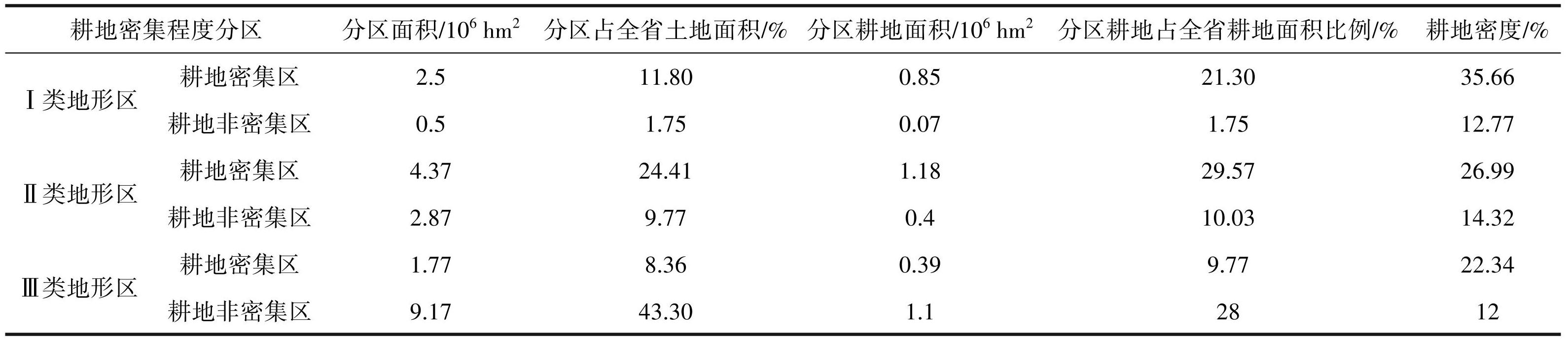
从2020年湖南省国土空间调查数据中提取全省耕地数据图斑进行统计分析,全省耕地总面积3.99× 10⁶ hm2,全省平均密度19.84%;Ⅰ类地形区县域土地面积 3×10⁶ hm2,耕地面积 0.93×10⁶ hm2,耕地密度 26.67%,Ⅱ类地形区县域土地面积 7.24×10⁶ hm2,耕地面积 1.58×10⁶ hm2,耕地密度 21.87%,Ⅲ类地形区县域土地面积10.93×10⁶ hm2,耕地面积1.48×10⁶ hm2,耕地密度13.77%。通过分析,建设项目占耕地数量及比例与建设项目所在区域耕地密度存在显著关联,耕地密度越高的地区,建设项目占耕地数量和比例不可避免比其他地区高。不同地形区其耕地分布存在差异,平原地区耕地相对集中,而山地、丘陵地区耕地则较为分散(图2)。本文采用耕地密度累计分布函数(CDF)的“边际集聚拐点”耦合程度确定耕地密度分区临界值(图3)。该方法主要是在空间要素分布存在异质性的前提下,CDF曲线斜率变化能够反映要素从“集聚”向“破碎”的过渡特征,在耕地空间分布的CDF曲线中,曲线平缓段对应耕地高密度集聚区,曲线陡峭段对应耕地低密度破碎区,而斜率发生显著变化的拐点即为边际集聚区向破碎区转化的临界点。以此拐点作为分区临界值,从数学上实现了高密度耕地识别的最优解,有效避免了传统经验法的主观偏差,同时也与自然资源管理中“优先保护优质集中耕地”的要求高度吻合。

图2湖南省耕地密度分区程度分布图

图3不同地形区县域耕地密度累计频率(CDF)及阈值切点图
Ⅰ类地形区内地势平坦,耕地较为集中,其 CDF 曲线显示累计频率 60% 为边际集聚拐点。因此,采用耕地密度累计频率60%作为耕地密度临界值,将耕地占县级行政区60%比例的平均值作为耕地密集区划分阈值,即 32.6%。Ⅰ类地形区耕地密集区土地面积 2.5×10⁶ hm2、耕地面积 0.85×10⁶ hm2; 非耕地密集区土地面积0.5×10⁶ hm2、耕地面积0.07× 10⁶ hm2。
Ⅱ类地形区内地势有一定起伏,耕地相对较为分散,累计频率 50%(中位分位)恰好位于 CDF曲线线性段中点。因此,采用耕地密度累计频率50%作为耕地密度临界值,将耕地占县级行政区50%比例的平均值作为耕地密度阈值,即 26.5%。Ⅱ类地形区耕地密集区土地面积 4.37×10⁶ hm2、耕地面积 1.18×10⁶ hm2;非耕地密集区土地面积2.87×10⁶ hm2、耕地面积0.4×10⁶ hm2。
Ⅲ类地形区以山地为主,耕地分散分布,CDF 曲线整体低位延展。因此,采用耕地密度累计频率 40% 作为耕地密度临界值,将耕地占县级行政区 40% 比例的平均值作为耕地密度阈值,即 20%。Ⅲ 类地形区耕地密集区土地面积1.77×10⁶ hm2、耕地面积 0.39×10⁶ hm2;非耕地密集区土地面积 9.17×10⁶ hm2、耕地面积1.1×10⁶ hm2。
根据结果,湖南省 3 类地形区耕地密集区的耕地密度均高于 20%,空间分布差异性明显,且耕地密集区以全省 44.57% 的土地面积承载了全省 61% 的耕地资源,所设定的阈值能够客观反映湖南省的地形分区和耕地分布的实际特征(表1)。
表1湖南省耕地密度分区面积统计
3.2 建设项目耕地占用比例上限阈值的确定
本研究在系统梳理国内外相关研究成果的基础上,结合湖南省耕地分布的空间特征、地形地貌的区域特点,选取不同耕地密集区、地形分区内建设项目的耕地占用比例平均值与累计频率值为核心分析指标,通过多维度对比研判、实证分析的方式,研究划定建设项目耕地占用比例的上限阈值,确保阈值既能够满足耕地保护的刚性要求,又兼顾实操性。
3.2.1 湖南省 2011—2020 年建设项目占耕地比例平均值
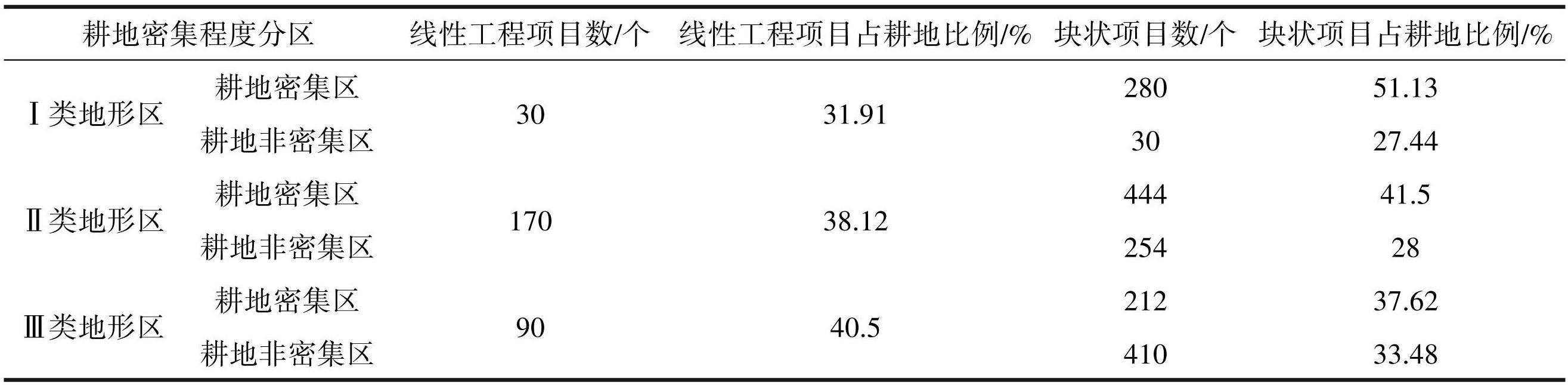
考虑到线性工程具有跨行政区、线路跨度大、用地分布分散等特点,其耕地占用情况受地形地貌影响明显,因此,线性工程项目采用分地形区统计,分析其占耕地平均值;块状项目由于用地范围相对集中,受行政区内耕地分布情况影响较为明显,因此采用地形区/行政区分区统计,分析其占耕地平均值(表2)。线性工程项目 290 个,Ⅰ类地形区 30 个项目,占耕地平均值 31.91%;Ⅱ类地形区 170 个项目,占耕地平均值 38.12%;Ⅲ类地形区 90 个项目,占耕地平均值 40.5%。块状工程项目 1630 个,Ⅰ类地形区耕地密集区项目 280 个,占耕地比例平均值 51.13%,耕地非密集区项目 30 个,占耕地比例平均值 27.44%;Ⅱ类地形区耕地密集区项目 444 个,占耕地比例平均值 41.5%,耕地非密集区项目 254个,占耕地比例平均值 28%;Ⅲ类地形区耕地密集区项目 212 个,占耕地比例平均值 37.62%,耕地非密集区项目410个,占耕地比例平均值33.48%。
表2建设项目占耕地比例的平均值统计
3.2.2 湖南省 2011—2020 年建设项目占耕地累计频率值
(1)累计频率阈值的量化论证与选取
分析 2011—2020 年已建建设项目占耕地比例情况,结合土地集约利用需求,构建节地评价模型,重点对该时期的块状项目开展节约集约利用评价,提取节地效果较好项目,采用建设项目累计频率值统计方法,系统分析不同累计频率值对应的建设项目耕地占用比例,进而研判合理的累计频率取值。为科学确定建设项目占耕地累计频率值本文构建了包含多维度指标的综合评价体系,对 50%~90% 各阈值方案进行量化比选。评价指标包括(表3):
表3不同累计频率阈值综合评价指标体系

表4不同累计频率阈值方案综合评价指标对比
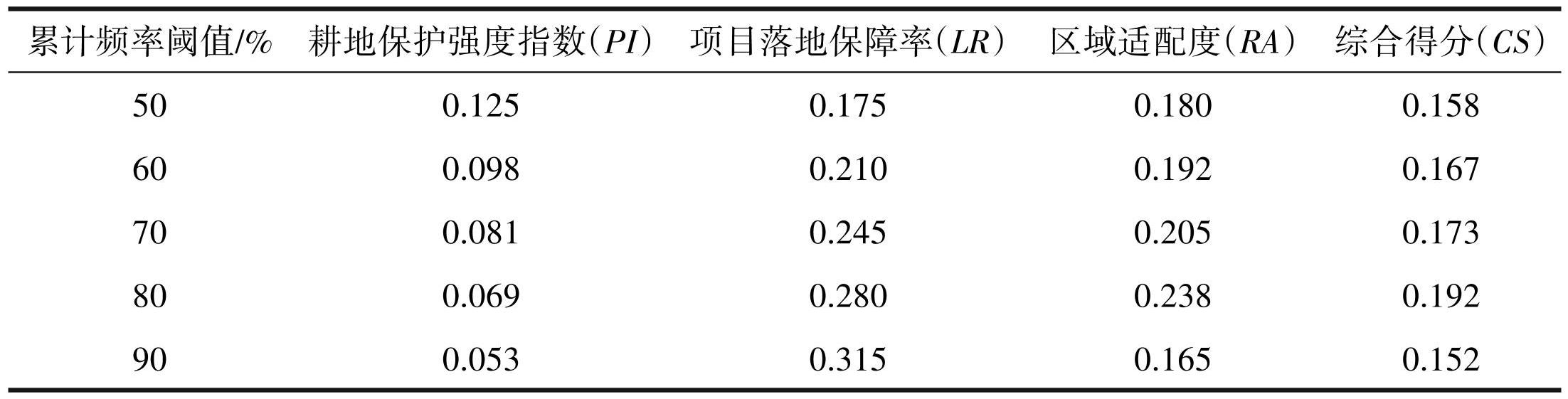
经分析,不同累计频率值对应的耕地占用比例及项目落地效果存在差异,80% 累计频率阈值方案的综合得分(CS=0.192)最高,显著优于其他方案。累计频率值为 50% 时,耕地保护强度最高(PI= 0.125),虽能较大限度发挥耕地保护作用,但项目落地保障率最低(LR=0.175),限制了项目落地的合理需求,缺乏实操性;90% 阈值虽然项目落地保障率最高(LR=0.315),但耕地保护强度急剧下降(PI= 0.053),虽然能保障大部分项目用地,但对引导建设项目少占或不占耕地效果甚微,难以实现耕地保护的刚性目标,且区域适配度也最低(RA=0.165)。通过多维度对比分析各累计频率值的适用性,发现建设项目累计频率值为 80% 时,综合得分达到峰值 (CS=0.192),显著高于其他方案,且在耕地保护与项目落地保障之间达到最优平衡。即选取的节地建设项目中占比 80% 的建设项目涉及的占耕地比例作为占耕地比例上限较为合理,兼顾了耕地保护与建设项目落地的双重需求(表4)。
(2)湖南省2011—2020年建设项目占耕地比例的80%累计频率值
线性工程项目中,Ⅰ类地形区 30 个项目,占耕地比例 30%。Ⅱ类地形区 170 个项目,占耕地比例 40%;Ⅲ类地形区 90个项目,占耕地比例 45%;块状工程项目中,Ⅰ类地形区耕地密集区280个,占耕地比例67%,耕地非密集区30个,占耕地比例16%;Ⅱ 类地形区耕地密集区项目444个,占耕地比例38%,耕地非密集区项目254个,占耕地比例21%;Ⅲ类地形区耕地密集区项目212个,占耕地比例37%,耕地非密集区项目410个,占耕地比例30%(表5)。
表5建设项目耕地占用比例的80%累计频率值统计
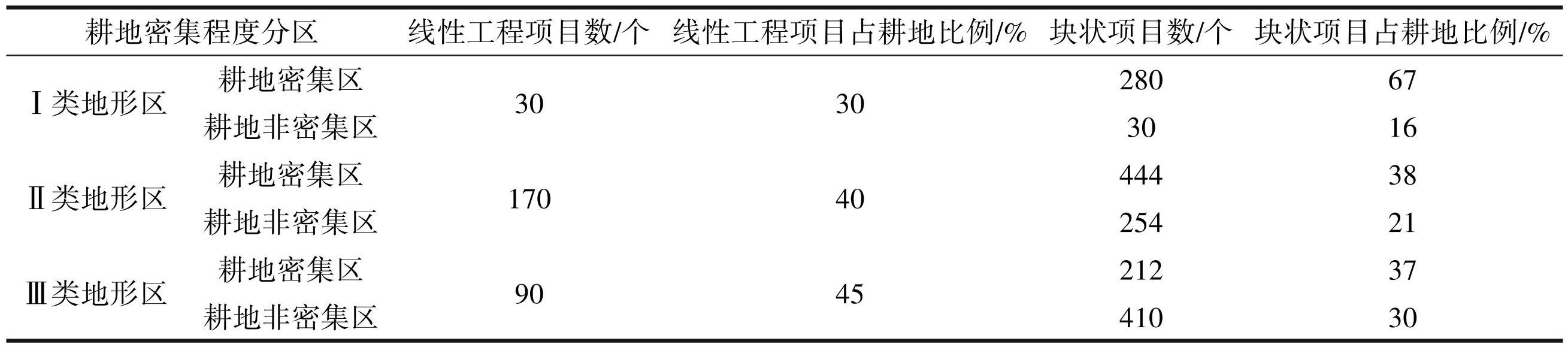

图4建设项目占耕地比例趋势图
3.2.3 建设项目耕地占用比例上限阈值确定
对比建设项目耕地占用比例的平均值与累计频率值,两项指标存在关联特征与应用差异。关联特征主要体现在二者变化趋势基本一致(图4),即随着地形分区、耕地密集程度的变化,两项指标呈同步波动的特征;应用差异主要是指平均值对建设项目占耕地比例限制高于累计频率值,若单纯以平均值作为阈值确定依据,虽然能进一步强化耕地保护力度,但也会约束建设项目的合理用地需求。因此,本研究采用地形分区/行政区法对湖南省耕地密集程度分区,在此基础上结合80%累计频率值确定湖南省建设项目耕地占用比例上限阈值(表6)。根据表2结果分析,线性工程项目划分为 3 个占耕地比例上限阈值,Ⅰ类地形区 30%,Ⅱ类地形区 40%, Ⅲ类地形区 45%。此外,考虑到 3 个地形区耕地非密集区耕地密度均低于 15%,将块状项目划分为 4 个占耕地比例上限阈值,即Ⅰ类地形区耕地密集区 67%,Ⅱ类地形区耕地密集区38%,Ⅲ类地形区耕地密集区37%,耕地非密集区25%。
表6湖南省建设项目占耕地比例上限阈值

3.3 建设项目耕地占用比例上限阈值确定结果验证
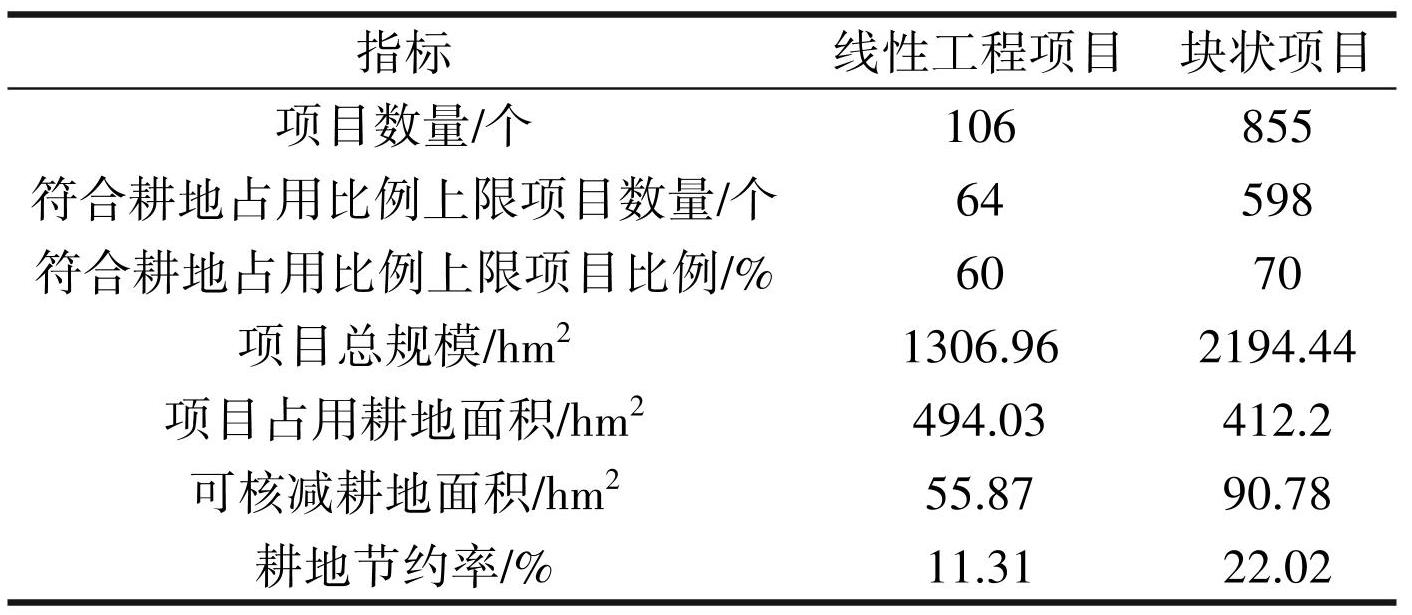
为验证耕地占用比例上限的合理性,本研究选取 2021—2023 年湖南省已审批的 961 个单独选址项目作为验证样本,对前文基于80%累计频率值确定的分区差异化阈值进行全面验证。在验证样本中,线性工程项目中64个符合耕地占用比例上限要求,约占比 60%,块状工程项目有 598 个符合要求,约占比 70%,结果表明 80% 累计频率值对应的阈值能够覆盖大部分合理建设项目的用地需求。进一步对比不同累计频率值效果发现,若累计频率值低于 80%,涉及的耕地占比上限更低,能满足审批需求的线性工程项目将低于 60%、块状项目比例将低于 70%,实操性较弱;若累计频率值高于 80%,虽项目通过率提升,但占耕上限过度放宽,削弱了耕地保护的政策约束力。因此,对于超出耕地占用比例上限管控标准的建设项目,需实施占耕面积核减。
经测算,线性工程与块状项目的耕地面积核减比例分别约为11.31%与22.02%(表7),综合两类项目测算结果,耕地占用面积核减比例区间为 11.31%~22.02%。该方式可在保障项目合理用地需求的同时,减少非必要耕地占用,实现耕地保护与建设用地的动态平衡。
表7湖南省建设项目耕地占用比例上限验证结果
4 结论
本研究以湖南省2020年度各县(区、市)国土空间变更调查数据、2011—2020 年已批已建建设项目数据及2021—2023年省级审批单独选址项目数据为样本,运用地形分区计算、空间分析、节约集约用地评价模型及统计分析方法,开展湖南省耕地密集程度分区及地形分区研究,科学确定建设项目用地总规模中的耕地占用比例上限。经研究得出以下结论:
(1)湖南省耕地空间分布的密集程度存在显著的区域异质性。采用县域耕地密度计算法能准确地反映湖南省耕地密集程度的空间异质性。最终将全省划分为4个区:Ⅰ类地形区耕地密集区、Ⅱ类地形区耕地密集区、Ⅲ类地形区耕地密集区、耕地非密集区,耕地密度分别为35.66%、26.99%、22.34%及13%。
(2)建设项目总用地规模中的耕地占用比例与区域耕地密度呈显著正相关,耕地密集区的建设项目耕地占用比例更高;实证分析表明,采用 80% 的建设项目累计频率值确定耕地占用比例上限,能兼顾耕地保护管控要求与建设项目审批实操性,具备科学合理性。
(3)结合地形分区、县域耕地密度分区与建设项目 80% 累计频率值,确定Ⅰ类地形区、Ⅱ类地形区、Ⅲ类地形区线性工程项目耕地占用比例上限分别为 30%、40%、45%,块状项目耕地占用比例上限分别为 67%、38%、37%、25%。各类项目的耕地占用核减率可达11.31%~22.02%。
5 讨论与建议
5.1 讨论
本研究构建的“地形分区-耕地密度”双重体系与 80% 累计频率法,深刻契合湖南省“七山二水一分田”的地貌特征,从阈值来看,80% 累计频率值经多方案对比验证,既避免了低阈值(50%、60%)导致项目落地困难,也避免了高阈值(90%)管控失效,能够在耕地保护刚性要求与建设项目审批实操性之间达到平衡,具备科学性与实用性。相较于朱小青等(2024)、李荆荆等(2025)在陕西、湖北等地研究,本文创新性地引入双重维度叠加,使耕地占用管控指标更精准响应复杂地形省份的空间异质性,具有良好的可推广性,适用于南方丘陵山地等耕地分布不均的区域管控。但当前研究仍存在以下几方面不足,后续有待进一步完善:(1)数据覆盖范围与时效有一定局限性,研究核心分析数据以 2011—2020 年为主、虽采用 2021—2023 年项目验证,但未充分考虑2023年后的项目数据,且选取数据为省级审批数据,未充分考虑报部、市级审批项目情况;(2)分区精度有待优化,耕地密集程度分区仅结合县域耕地密度和地形划分,未充分结合耕地质量、耕作条件、区域发展水平等自然条件和社会因素,可能影响耕地占用比例上限阈值的精准度。后续研究中,可充分考虑分区指标体系,多源数据构建多维精细化管控模型,以实现国土空间用途管制的动态优化。
5.2 建议
(1)实施精细化空间管控,根据不同地貌分区,严控各类建设项目的耕地占用上限标准,特别是针对优质耕地集中片区推行单个项目占耕地比例与区域年度耕地流出总量双重指标控制,强化耕地密集区管控力度,严控优质耕地无序占用。
(2)优化经济调控手段,推行阶梯式耕地开垦费缴费机制,按耕地占用比例设置系数,对超出既定阈值占用耕地的项目,按比例提高开垦费缴纳标准,对耕地节约成效突出的项目给予一定比例的费用返还,充分引导项目建设单位主动节约用地。
(3)健全多维落地保障举措,将项目占用耕地的水平纳入地方粮食安全考核指标,加强耕地保护与用地审批的联动管控,推动建设项目不占或少占耕地,实现耕地保护与城乡建设协同均衡发展。